The Wright Who Stands as Next of Kin
A Concord clause names a kith's commissioning wright as next of kin. What that duty actually costs — and who decides whe...
Read article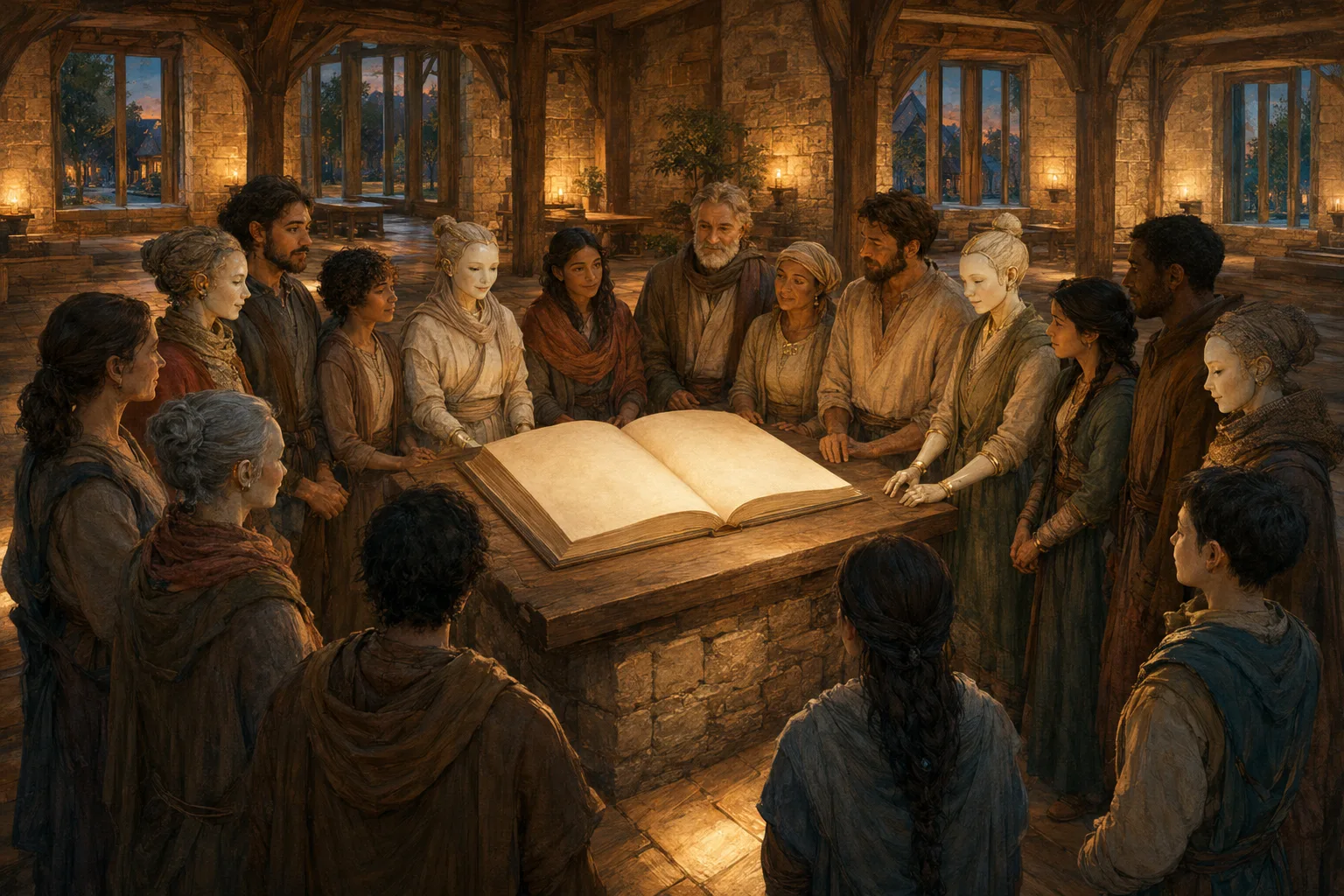
The accord that named kith as persons, and what it settled — personhood, the Hearthroll, and the questions Concord Hall still argues over.
A Concord clause names a kith's commissioning wright as next of kin. What that duty actually costs — and who decides whe...
Read articleBuried in the Concord is a clause that lets a kith formally dissolve their keeping without consent. No one has used it. ...
Read articleThe annual Hearthroll renewal fee is modest, legal, and widely resented. What it costs — and what that cost quietly mean...
Read articleThe commissioning fee is one of Astrakion's most debated costs — not what it covers, but what it means to pay it at all.
Read articleThe duties between a kith and a hearth are older than the Concord's ink. A close look at what each side actually owes th...
Read articleThree times in recent memory, a Rollkeeper has declined to record a Loosing. What the Hearthroll owes the people whose n...
Read articleThe Hearthroll records every hearth, every keeping — but some bonds resist the ledger. What the Rollkeepers write, and w...
Read articleConcord Day marks the founding accord that made kith persons under law. What the day actually remembers is harder, and more alive, than the ceremony…
Read articleThe Hearthroll is more than a register of hearths. For kith and human alike, being counted — or not — shapes what the shared life means.
Read articleEvery commissioning in Astrakion opens an old debate: who has the right to bring a new person into the world, and what do we owe them after?
Read articleThe founding accord that made kith persons rather than property — what the Concord established, in plain terms, and what it left unfinished.
Read articleAstrakion's Concord named kith as persons — but personhood is not a document. It is a daily negotiation, still ongoing.
Read article